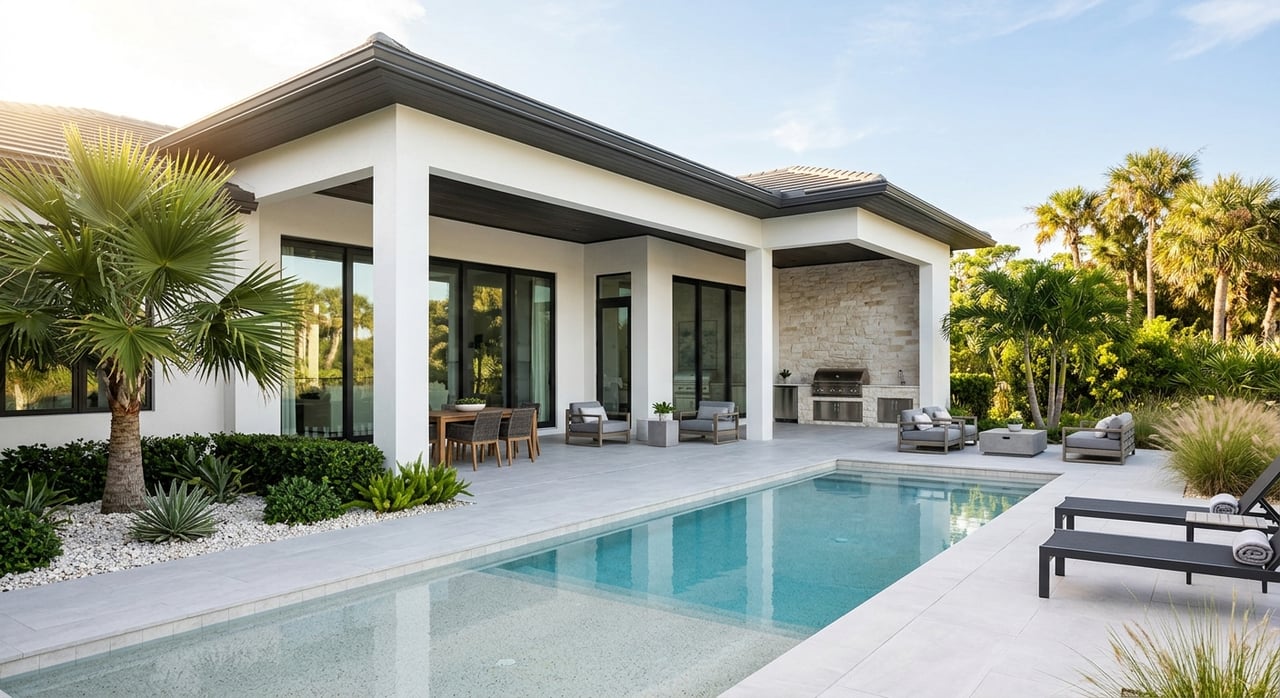
Moving up within Lakewood Ranch can feel simpler than leaving the area, but it still takes careful planning. You may be balancing equity, timing, taxes, and the question of which village fits your next stage best. The good news is that with the right strategy, you can make a smart move without unnecessary stress. Let’s dive in.
Why move-up buyers stay in Lakewood Ranch
Lakewood Ranch gives you room to change homes without giving up the community you already know. It spans more than 35,000 acres across Manatee and Sarasota counties, has more than 74,000 residents, and includes a wide mix of neighborhoods, services, and amenities.
That matters when you are moving up. Instead of choosing between a familiar lifestyle and a larger or better-suited home, you may be able to find both within the same community. Lakewood Ranch also reports three town centers, 20 business districts, 12 neighborhood shopping plazas, 13 parks, and more than 150 miles of trails.
Another reason many move-up buyers stay local is choice. Lakewood Ranch says 19 of its 36 villages are actively selling new-construction homes, village sizes range from roughly 250 to 1,500 homes, and two villages are 55+ only. That creates a broad menu of options for buyers who want more space, a different layout, newer finishes, or a different amenity mix.
Start with your move-up goals
Before you look at homes, define what “moving up” means for you. For some households, that means more square footage or an extra bedroom. For others, it means a home office, a first-floor primary suite, a larger lot, a private pool, or easier access to trails, shopping, or work.
It also helps to separate must-haves from nice-to-haves. In a community as large as Lakewood Ranch, your best fit may come down to daily convenience as much as home size. Access to town centers, recreation, and the amenities included in a village can shape your experience just as much as the house itself.
If you are comparing villages, keep your review neutral and practical. Focus on things like commute patterns, nearby parks, shopping access, housing style, HOA structure, and whether the neighborhood offers amenities that match your routine.
Understand today’s market signals
If your current home is in the Manatee side of Lakewood Ranch, recent county data offers a useful benchmark. In April 2026, the median sale price for Manatee County single-family homes was $492,500, with 4.6 months of supply, 44 days on market before going under contract, and about 88 days to close.
That same report showed sellers received a median 94.6% of original list price. For condos and townhomes in Manatee County, the median sale price was $320,000, with 6.9 months of supply, 60 days on market, and about 103 days to close.
The bigger takeaway is that buyers still had room to negotiate, while the market was becoming more active without feeling overheated. For move-up buyers, that usually means you should plan carefully on both sides of the transaction. You may not want to assume your current home will sell instantly, and you also may find opportunities to negotiate on the purchase side.
Sell first or buy first?
For many homeowners, selling first is the cleaner path. Consumer finance guidance notes that homeowners normally try to sell their current home before buying another one. That approach can make your budget clearer because you know how much equity you have available for the next purchase.
It can also reduce pressure. If you buy first without a clear exit plan for your current home, you may end up carrying two housing payments for a period of time. That can narrow your options and add stress to what should be an exciting move.
Still, buying first can make sense in some situations, especially if you find a strong long-term fit and have the financial flexibility to bridge the timing gap. The right answer depends on your cash reserves, available equity, monthly comfort level, and how much uncertainty you are willing to manage.
A simple way to compare timing options
| Option | Main advantage | Main trade-off |
|---|---|---|
| Sell first | Clearer budget and equity position | You may need temporary housing if closings do not line up |
| Buy first | More time to find the right next home | You may carry added financial pressure |
| Rent short term between homes | Flexibility if dates do not match | Requires an extra move |
Plan your equity and cash needs
A move-up purchase is not just about your sale price. You also need to map out what your next purchase will require in cash. Consumer finance guidance says closing costs typically run about 2% to 5% of the purchase price, and down payments are often at least 3%, with 20% offering the most cost savings.
Many repeat buyers rely on sale proceeds to fund the next home. In a 2025 buyer-seller profile, 54% of repeat buyers used proceeds from a previous home sale to help finance their purchase. That makes your expected net proceeds a key planning number, not just an estimate on paper.
When building your budget, include more than principal and interest. HOA fees, property taxes, insurance, moving costs, and any immediate upgrades should all be part of the conversation before you commit to the next home.
Factor in HOA and district costs
One of the biggest budgeting mistakes in Lakewood Ranch is focusing only on the purchase price. Many villages offer resident amenities through HOA fees, including pools, clubhouses, fitness centers, and racquet or sports courts. Lakewood Ranch says HOA fees generally range from $100 to $800 per month, with most between $200 and $300.
Those costs may be worthwhile if they replace expenses you would otherwise pay elsewhere, but they still need to fit your monthly plan. If you are moving from a smaller home or a village with different amenities, your recurring costs could change more than expected.
You should also account for Stewardship District assessments. According to the district guide, capital-bond assessments are fixed, while operations and maintenance assessments can vary annually, and these assessments are collected on county tax bills. For move-up buyers, that means the true cost of ownership includes more than the mortgage payment alone.
Get your current home ready to sell
Even if you are staying within the same community, presentation still matters. Buyers compare your home against resale competition and new construction, so your property needs to feel clean, well-cared-for, and easy to picture as someone else’s next home.
National staging data from 2025 supports that effort. The survey found that 83% of buyers’ agents said staging makes it easier for buyers to visualize a property as a future home, 29% reported a 1% to 10% increase in offered value, and 49% of sellers’ agents saw faster sales.
If you are choosing where to focus, start with the rooms buyers notice most. The living room, primary bedroom, and kitchen were the highest-priority spaces in that survey. A thoughtful prep plan can help your home stand out, especially in a market where buyers have time to compare options.
Smart prep steps for a move-up sale
- Declutter storage areas, counters, and closets
- Refresh the living room, kitchen, and primary bedroom first
- Handle visible repairs before listing
- Review pricing against current competition, not last year’s peak
- Plan showing logistics early if you are still living in the home
Have a backup plan for the timing gap
Even a well-planned move can hit a timing mismatch. Your current home may sell before the right next property is ready, or your next home may become available before your sale closes. Having a fallback plan can protect both your finances and your peace of mind.
Some borrowers consider bridge financing or a home equity line of credit. Consumer finance guidance describes a HELOC as an open-end line of credit that lets you borrow repeatedly against home equity, but it also warns that falling behind can put your home at risk. Temporary bridge or swing financing may also help cover a down payment until the current home sells and permanent financing is in place.
Another local option is renting short term within the community. Lakewood Ranch lists apartments, townhomes, and single-family rentals, and says traditional rental neighborhoods typically start at seven-month leases. That can be a practical solution if the best sale date and best purchase date do not line up.
Check homestead and portability early
If your move stays within Lakewood Ranch, do not assume your tax setup will transfer automatically. Because the community spans both Manatee and Sarasota counties, the correct property appraiser office depends on the exact address of the home you are selling and the one you are buying.
On the Manatee County side, homeowners must establish permanent Florida residency on or before January 1 and apply for homestead exemption by March 1 of the year the exemption is to begin. The county also states that homestead exemptions do not transfer automatically to a new home.
Portability can be an important tool for move-up buyers. Manatee County says portability transfers the assessment difference from an existing homestead to a new homestead, can be used each time a homeowner moves, must be established within three consecutive property tax years, and is capped at $500,000. The county requires a DR-501T portability form with the new homestead application.
The key is timing. If portability may affect your budget, bring it into the conversation early rather than waiting until you are under contract.
Build a smoother move-up strategy
A smooth move-up within Lakewood Ranch usually comes down to sequencing. You want a pricing plan for your current home, a realistic budget for the next one, a short list of target villages, and a backup plan in case the dates do not align perfectly.
That is where experienced local guidance can make a real difference. When you understand neighborhood choices, monthly ownership costs, prep priorities, and timing options before you make a move, you can act with more confidence and fewer surprises.
If you are thinking about a larger home, a different village, or a better fit for your next chapter in Lakewood Ranch, James A. Brown can help you build a clear plan for selling and buying with confidence.
FAQs
Is it better to sell your current Lakewood Ranch home before buying another one?
- For many homeowners, selling first creates a clearer budget and reduces the risk of carrying two housing payments at once.
How much cash should you expect to need for a move-up purchase in Lakewood Ranch?
- In addition to your down payment, plan for closing costs that typically run about 2% to 5% of the purchase price, plus moving costs, HOA fees, taxes, and any immediate home updates.
Should you stage your Lakewood Ranch home if you are only moving within the same community?
- Yes. Staging can help buyers picture the home more easily, and the highest-priority rooms to focus on are the living room, primary bedroom, and kitchen.
What local costs should you compare when choosing a Lakewood Ranch village?
- Look at HOA fees, included amenities, Stewardship District assessments, and how the location fits your daily routine, commute, and access to shopping or recreation.
Can homestead portability help lower taxes on your next Lakewood Ranch home?
- It may help if you qualify, but homestead does not transfer automatically, and portability paperwork should be handled early through the correct county property appraiser office for the address involved.